
The Living Heritage of Cantonese Siu Mei in Manhattan's Chinatown
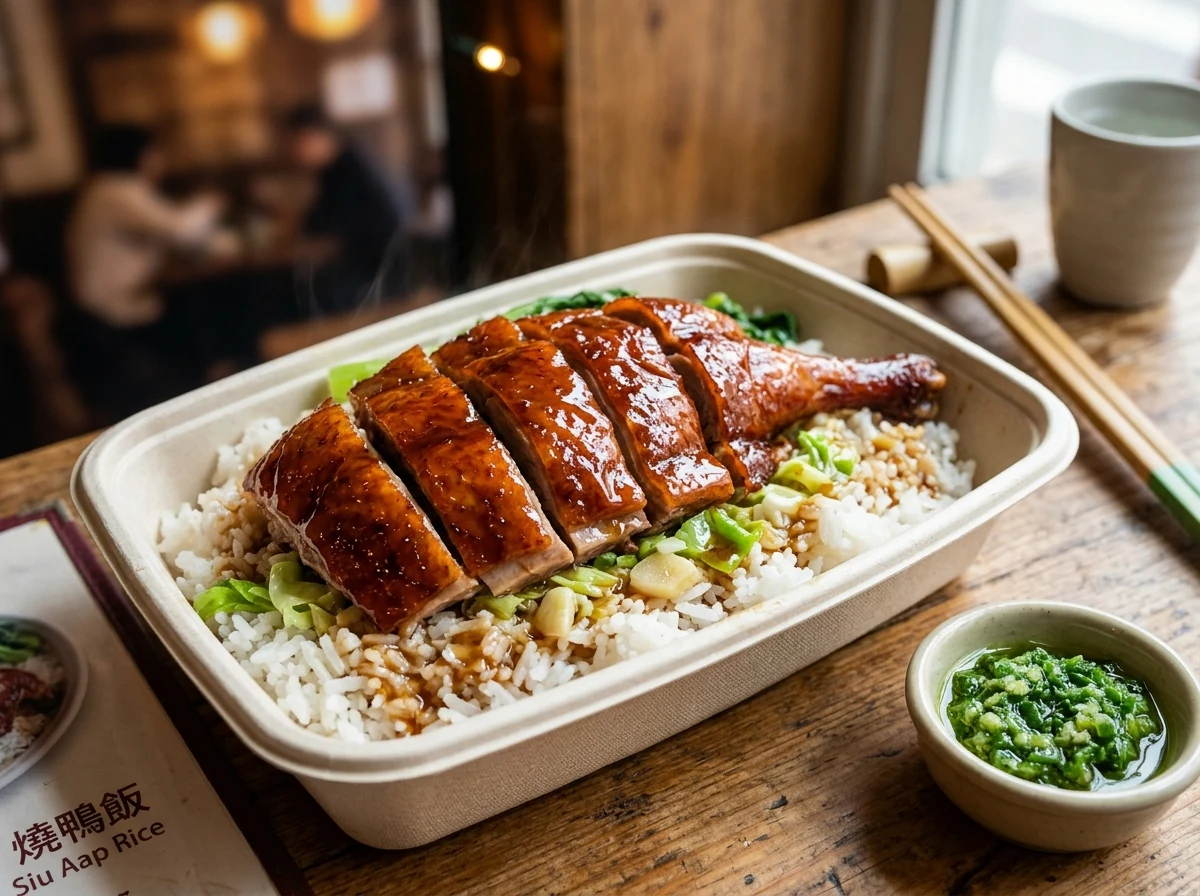
Step into Manhattan’s Chinatown on any crisp morning, and the sensory landscape is unmistakable: the sweet, maltose-tinged aroma of roasting spices drifting into the street, the gentle hum of exhaust hoods, and the sharp, rhythmic percussion of heavy cleavers striking wood.
This is the world of Siu Mei (燒味)—Cantonese roasted meats—a culinary pillar that has sustained working-class immigrant communities in New York City since the late 19th century. Among the dozens of butcher shops and banquet halls that have occupied Mott, Bowery, and Grand Streets over the decades, Wah Fung No. 1 Fast Food at 79 Chrystie Street represents one of the purest, most concentrated expressions of this craft. If you are planning your first trip, be sure to read our First-Timer's Guide to the Chrystie Street line.
The Anatomy of Cantonese Roast Duck (Siu Aap)
Unlike Beijing-style Peking duck, which is prized almost exclusively for its separated, crisp skin dipped in white sugar and wrapped in thin pancakes, Cantonese Siu Aap (燒鴨) is fundamentally an everyday feast. It is designed to be eaten with bone, skin, and rich meat together, paired with steaming rice to absorb the savory pan juices. Learn more about the delicate pairing of cabbage and jus in our deep-dive on the art of the Cantonese rice box.
The technique requires intense discipline:
- Internal Cavity Marination: The bird’s interior is seasoned with a complex slurry of five-spice powder, ginger juice, fermented bean curd, star anise, aromatic rice seasonings, and licorice root, then tightly sewn shut with a stainless-steel pin.
- Skin Scalding & Lacquering: The exterior is scalded with boiling water to tighten the skin pores, then basted in an emulsion of maltose syrup and rice vinegar.
- Air Drying: Ducks are hung in a ventilated curing room for hours until the skin becomes parchment-dry to the touch.
- Drum Roasting: Suspended over intense heat in specialized cylindrical roasting drums, the duck fat renders through the skin, resulting in an amber-mahogany glaze that crackles beneath the teeth.
The Master Stock Tradition (Lou Mei & See Yau Gai)
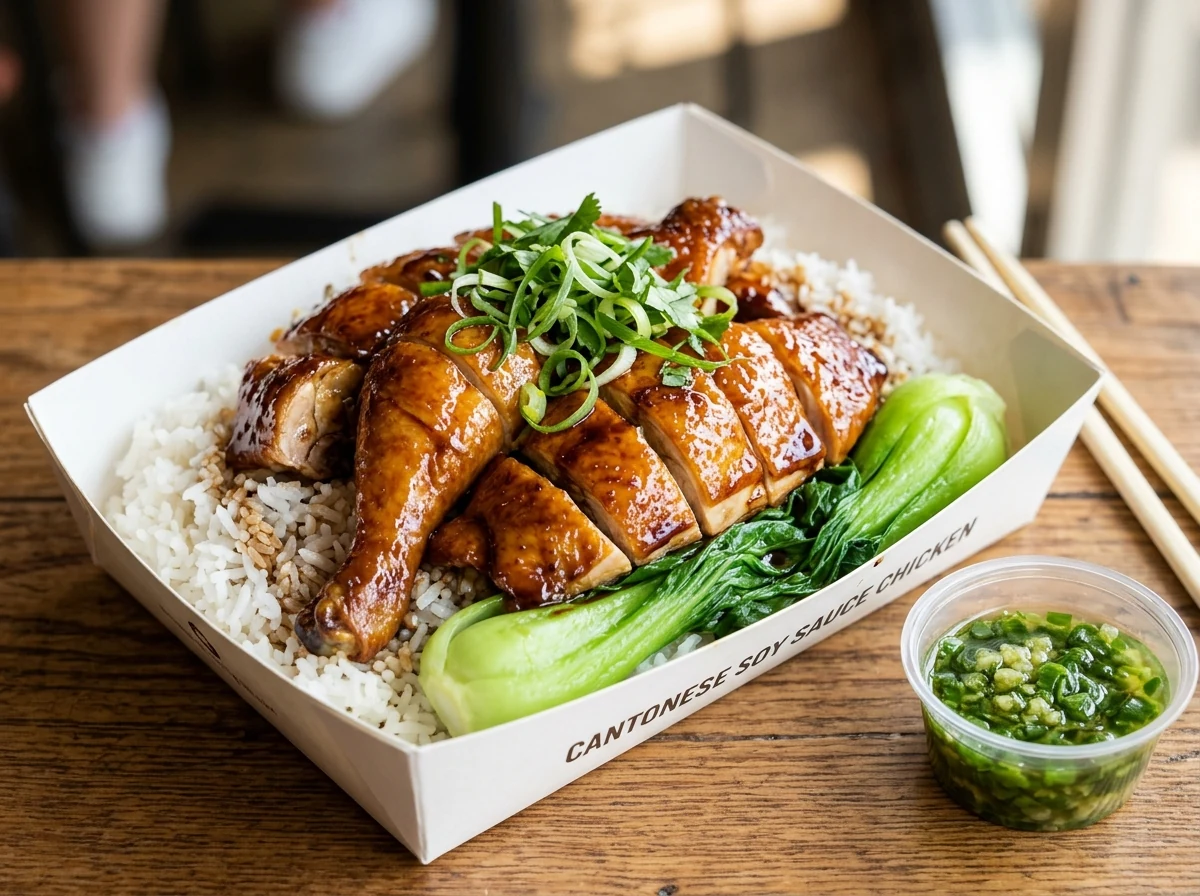
Alongside roasted poultry stands the complementary Cantonese art of master-stock poaching. Soy Sauce Chicken (See Yau Gai / 豉油雞) does not undergo high-heat dry roasting; rather, it is gently submerged in an aromatic "master stock" (lou mei / 滷水).
Traditional Cantonese kitchens treat master stocks with near-reverence. Enriched with aged dark and light soy sauces, rock sugar, cinnamon bark, cloves, and whole fresh ginger, the broth is replenished daily with new poultry juices. By simmering whole birds beneath the boiling point, the chicken meat remains astonishingly tender and juicy, while the skin takes on a rich golden-amber sheen.
The Cleaver Master: Culinary Choreography
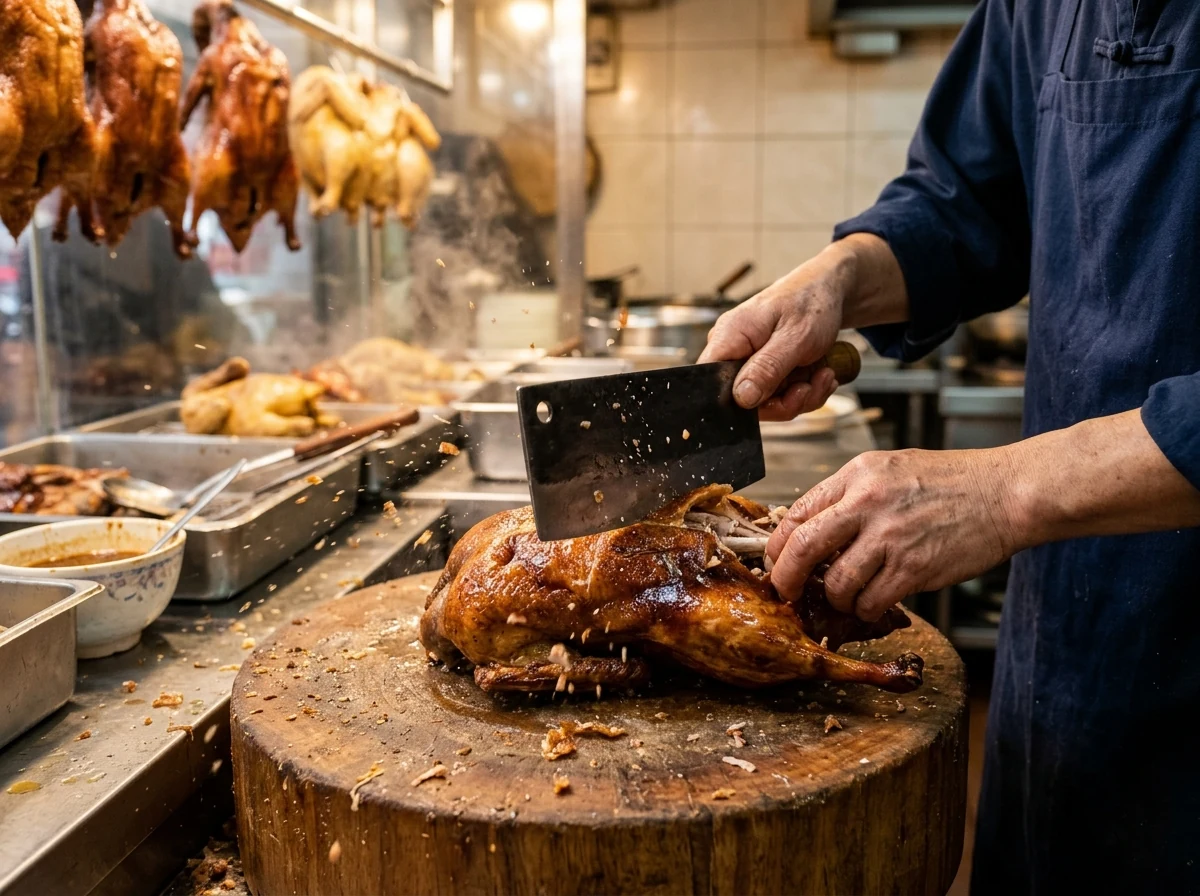
At Wah Fung, the entire operation hinges on the person behind the chopping block. Carving bone-in poultry quickly without shattering bone into splinters requires decades of muscle memory.
With three or four rapid cleaver thuds, a whole roast duck is halved, quartered, and sliced into neat uniform sections. Using the wide blade of the carbon steel cleaver as a spatula, the butcher scoops the entire sliced portion in a single fluid gesture, depositing it squarely across the rice bed. It is an art form that transforms an inexpensive lunch into an unforgettable cultural experience.